Organic · Technical · Content
Visibility that keeps working after the budget stops.
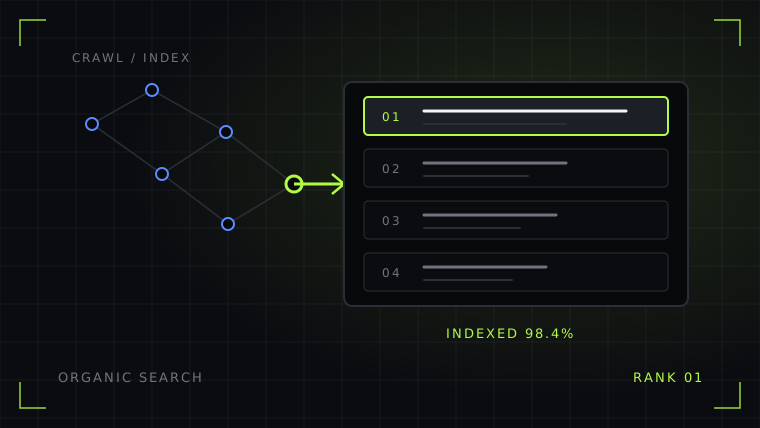
Technical foundations, content built around real search intent, and internal linking that compounds — measured on qualified organic traffic, not on a rank-tracking screenshot.
- 01
Ranking reports instead of revenue
Positions improve for terms nobody commercially valuable searches, while the queries that produce enquiries stay invisible.
- 02
Content written for a word count
Pages that cover a keyword without answering the question behind it, so they rank briefly and then drift.
- 03
A technical layer nobody owns
Slow templates, orphaned pages, duplicate parameters and a sitemap that disagrees with the navigation.
- 04
Three languages, one strategy
Translated pages competing with each other because hreflang, canonicals and localized keyword research were never done.
What we do
-
Technical foundations
Crawl and index health, Core Web Vitals, structured data, and the hreflang and canonical setup a multilingual site depends on.
-
Search intent mapping
Mapping what people actually search in each language and market to the pages that should answer them — and finding where nothing does.
-
Content strategy and production
A publishing plan with a commercial purpose per piece, written natively in English, Arabic or Polish rather than translated.
-
Internal linking and authority flow
Shaping how authority moves through the site so the pages that matter commercially are the ones that get it.
-
Measurement
Reporting on qualified organic sessions and assisted conversions, tied to the same conversion model the ad account uses.
Organic and paid should share one conversion model
Most agencies run SEO and Google Ads as separate projects with separate reporting. That wastes the single most valuable asset the ad account produces: a list of search queries with known commercial value, measured in real money.
We use it. Paid data tells us which intent converts; the content plan follows that evidence instead of a keyword tool’s volume column.
Technical first, because content cannot outrun it
There is no point publishing well-researched pages onto a template that renders slowly, duplicates itself across parameters and contradicts its own sitemap. The technical pass comes first: crawl health, Core Web Vitals, structured data, and — for a trilingual site — hreflang and canonical tags that actually resolve.
Multilingual means three strategies, not one translated three times
Arabic, English and Polish searchers do not phrase the same need the same way, and they do not share the same competitive landscape. Each language gets its own keyword research and its own natively written content. Translated pages are the most common reason multilingual sites underperform in two of their three markets.
Questions
How long does SEO take to show results?
Technical fixes can move things within weeks. Content and authority usually take three to six months to compound. Anyone promising rankings in thirty days is selling something else.
Do you work on all three languages?
Yes, and they get separate keyword research. Translating English keywords into Arabic or Polish produces pages that match no real search behaviour.
Can SEO replace our Google Ads spend?
It can reduce dependence on it, not replace it. The two work best together — ads tell you which queries convert, which is the best possible input to a content plan.
How we work
Curious how visible your business actually is without ads?
Technical foundations, content built around real search intent, and internal linking that compounds — measured on qualified organic traffic, not on a rank-tracking screenshot.